
Registration is now CLOSED!
When? Tuesday, March 3rd (8:30am) to Wednesday, March 4th (noon), 2026 (date adjustment)
Who? Students, scientists, managers, and anyone else interested in the state of knowledge regarding waterfowl ecology, habitat management, and science
Where? Wyndham Riverfront, 2 Riverfront Place, North Little Rock, AR
What? Formal (presentations, posters) and informal (social) exchange of information and ideas relevant to waterfowl science and management within and near the Lower Mississippi Valley JV geography
Hotel Location: Wyndham Riverfront, 2 Riverfront Place, North Little Rock, AR
866-657-4458
ROOM BLOCK SOLD OUT!
For more information please contact LMVsymposium@gmail.com
PLENARY SPEAKERS
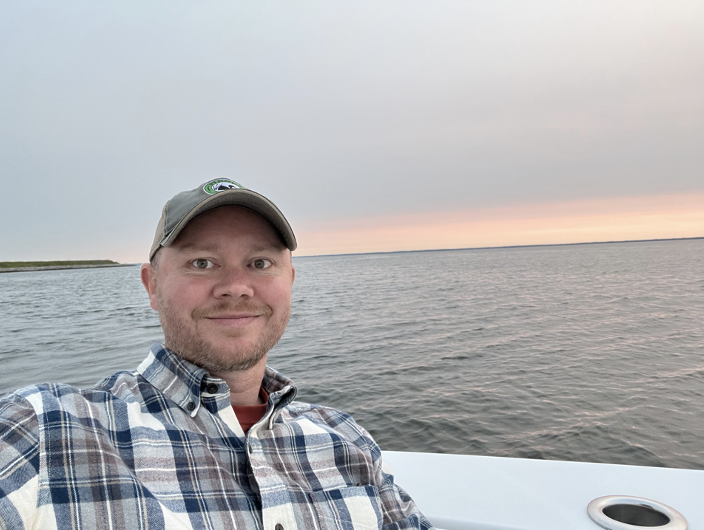
Dr. Tony Roberts
North American Waterfowl Management Plan Coordinator
Dr. Tony Roberts grew up in Nebraska then studied and worked in Wyoming, Texas, and Utah among other places. After obtaining a Ph.D. at Utah State University, Tony started with the US Fish and Wildlife Service Migratory Bird Program where he worked in the Atlantic Flyway office until 2022. Since then, Tony has been the USFWS coordinator of the North American Waterfowl Management Plan. His experience with migratory bird management runs the gamut from surveys and habitat management to regulations and statistical modeling. Much of his current focus is translating continental waterfowl science and planning to regional scales for use in local conservation decisions.
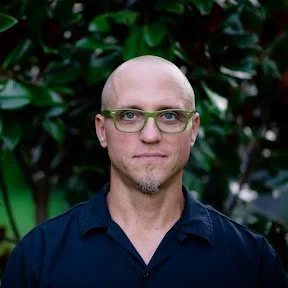
Adam Phelps
Waterfowl Research Biologist, Indiana Department of Natural Resources
Adam has been the Indiana waterfowl biologist since 2005—that’s 20 years! In that time, he has worked on several important aspects of duck harvest management at the regional, national, and continental scale. He has chaired the Upper Region Regulations Committee for the Mississippi Flyway Council’s Game Bird Technical section for several years, as well as the Adaptive Harvest Management (AHM) Committee. He was heavily involved in the 5-year, two-Flyway process of assessing and updating duck harvest management in the mid-continent that was affectionately referred to as “Mid-continent Mallard Double-Looping.” He has served on the Harvest Management Working Group since 2011. This group of primarily state and federal biologists deals with the machinery that keeps duck harvest management running in the US. Adam lives just south of Bloomington, Indiana at Ghostwood Farm, a small vegetable, berry, and egg farm that mostly grows weeds with his long-suffering wife, two mostly well-adjusted teenagers, two curmudgeonly old dogs, 34 psychotic chickens, and the first cat he’s ever had. In his spare time (HA), he tries to keep the crops higher than the weeds, hunts around the home place, plays a lot of games, and empowers people by teaching martial arts.
Dr. Barbara Avers
Species Management Section Supervisor, Michigan Department of Natural Resources, Wildlife Division
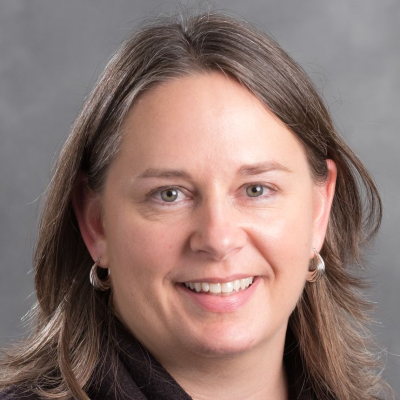
Barbara Avers is the Species Management Section Supervisor for the Michigan Department of Natural Resources (MDNR) Wildlife Division. Formerly, she was the Waterfowl and Wetland Specialist, leading all efforts related to waterfowl management including development of migratory bird hunting regulations and policy, human-waterfowl conflict programs, and public engagement. She was also lead the MDNR Wildlife Division on wetland habitat conservation efforts including planning and partnerships to implement large-scale wetland protection and restoration. Barbara represents the MDNR on the Mississippi Flyway Council and chairs or serves on several Flyway and national committees including the North American Waterfowl Management Plan Human Dimensions-Public Engagement Team. While employed with the MDNR, she earned her Ph.D. in Fisheries and Wildlife (in Human Dimensions of Wildlife Management) from Michigan State University where she explored support and stewardship potential of stakeholders associated with wildlife management areas that are intensively managed for waterfowl and waterfowl hunting. Barbara’s previous academic training includes a M.S. in Wildlife Ecology from Mississippi State University and a B.S. in Zoology from Michigan State University. In addition to waterfowl, her research interests include building support and stewardship for wetland conservation and sustainable wildlife management, stakeholder engagement, and the integration of social science into wildlife management policy and practice.